Moissanite vs Lab-Grown Diamond Engagement Rings: A Practical Buyer’s Guide
Introduction
Picking an engagement ring today isn’t just about carats and clarity anymore — it’s about finding a stone that fits your life, your style, and your values. More couples are moving away from traditional mined diamonds, and two alternatives keep popping up: moissanite and lab-grown diamonds.
At first glance, they can look almost identical. But spend a few minutes with each, and you’ll notice they behave differently. Moissanite practically catches every ray of light and turns it into a rainbow show, while a lab-grown diamond keeps that calm, classic brilliance that whispers timeless elegance.
I’ve seen both in real rings, on real hands, and here’s what I’ve learned: neither is inherently “better.” It’s about what works for you — your budget, your lifestyle, and the kind of sparkle that makes you smile every day. In this guide, we’ll break down appearance, durability, price, and practicality — without drowning in technical jargon.

1. Why Moissanite and Lab Diamonds Are Often Compared
These days, people notice more than just sparkle. Savvy buyers want ethically sourced stones, fair pricing, and something that lasts. Moissanite and lab-grown diamonds tick all the boxes, yet they are very different gems underneath.
What is Moissanite?
Moissanite has a fun origin story: it was first discovered in a meteorite. Today, it’s lab-created, incredibly durable (9.25 on the Mohs scale), and famous for its “fire” — the rainbow flashes that make it literally sparkle in every light. If you love attention-grabbing, show-stopping sparkle, moissanite delivers that.
What are Lab-Grown Diamonds?
Lab-grown diamonds are the real diamonds - chemically identical to mined ones, same hardness (10/10), same prestige - just made in a lab. They don’t have the rainbow “disco-ball” effect of moissanite, but they radiate that classic, icy brilliance everyone associates with diamonds. If you want timeless elegance, these are your go-to.
Why They Appeal Today
Ethical peace of mind: Conflict-free, smaller environmental footprint.
Bigger stones for less money: You could afford a 2–3 carat ring without blowing your budget.
High-end looks: Both provide the premium, colorless appearance expected in engagement rings.
So the essential question becomes: do you want maximum sparkle and savings (moissanite) or a real diamond feel at a discount (lab-grown)?

2. Moissanite vs. Lab-Grown Diamond: How They Look in Engagement Rings
The way a ring catches light every day is the deal-breaker for most people. Both stones look beautiful, but they play with light differently.
Fire, Brilliance, and Sparkle
Moissanite has a higher refractive index than a diamond, bending light more intensely. The result? A “disco ball effect” — a wild explosion of rainbow flashes.
Lab-grown diamonds, on the other hand, have a more balanced brilliance. They mix white and colored light to create that crisp, elegant sparkle diamonds are known for. It’s less flamboyant than moissanite but instantly recognizable as classic luxury.
Appearance in Natural Light
In sunlight, moissanite practically glows. You’ll notice its colors from across the room. A lab-grown diamond stays steady, elegant, and refined - whether you’re in office lighting or candlelight.
Visual Differences by Cut
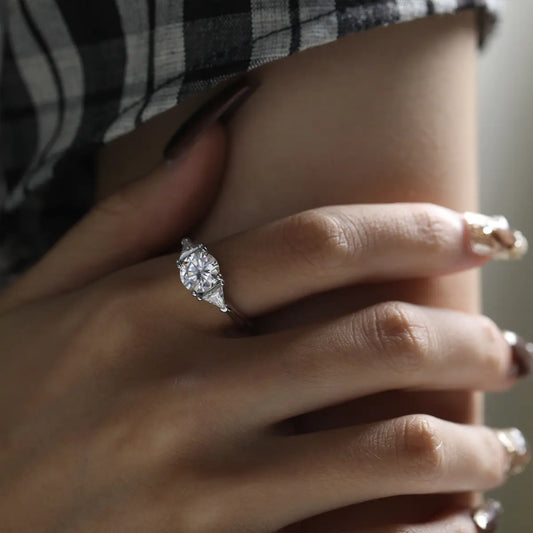
Round Brilliant: Here they look most similar. Moissanite’s extra fire can be subtle, and diamonds appear bright and sharp.
Fancy Cuts (Emerald, Asscher): Lab diamonds show depth and clarity better; moissanite may look flatter in open step-cuts.
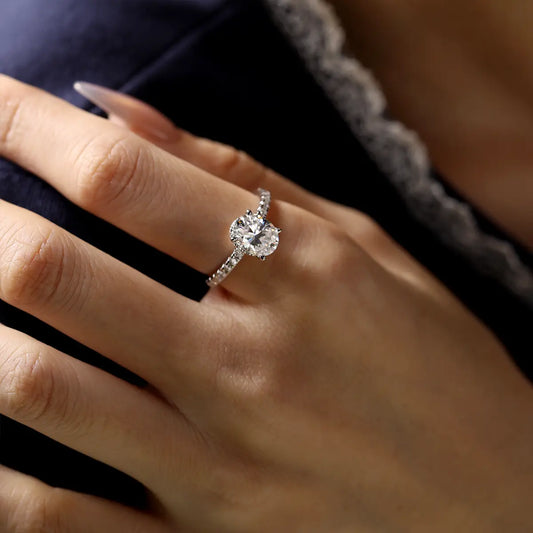
Oval or Pear Cuts: Moissanite can sometimes show a slight “bow-tie” or yellowish tint; lab-grown diamonds remain crisp.
Bottom line: If you want a stone that’s practically indistinguishable from a mined diamond, lab-grown wins. If you love high-intensity sparkle, moissanite steals the show.

3. Price and Value: What You’re Really Paying For
Price is often the deciding factor. While both options are cheaper than mined diamonds, their structures differ significantly.
Typical Price Ranges
Moissanite: Around $300–$600 for a 1-carat equivalent. Prices stay low as carat size grows, making big stones accessible.
Lab-Grown Diamonds: Roughly $800–$1,500 per carat. Still cheaper than mined diamonds, but a higher investment than moissanite.
Why Lab-Grown Diamonds Cost More
Growing diamonds requires precise technology — extreme heat and pressure (HPHT) or specialized gas chambers (CVD). Cutting and polishing them is labor-intensive because diamonds are the hardest material on Earth.
Value Considerations
Moissanite lets you allocate more budget to an exquisite platinum or gold setting.
Lab-grown diamonds offer long-term prestige — a real diamond experience at a fraction of the traditional cost.
4. Durability and Daily Wear
If your engagement ring is going to be worn daily, durability matters. Both stones are tough, but in slightly different ways.
Lab-Grown Diamonds (10/10 Mohs): Practically scratch-proof. Ideal for active lifestyles.
Moissanite (9.25/10 Mohs): Slightly softer, but still very durable — harder than sapphire or ruby.
Maintenance:
Both stones stay clear over time. Lab diamonds may attract skin oils; moissanite is less oily but can get a thin film from lotions. Cleaning is easy for both.
Lifestyle fit:
If you’re hands-on or have a busy lifestyle, a lab-grown diamond offers maximum protection. For most buyers, moissanite is resilient enough for decades of wear, and offers huge savings.

5. How to Choose: Moissanite or Lab-Grown Diamond?
It’s not about which is better - it’s about what works for you.
When Moissanite Makes Sense
You want maximum sparkle.
You want a bigger stone (2+ carats) without huge costs.
You want a unique, ethical, lab-created gem that’s not a traditional diamond.
When a Lab-Grown Diamond Makes Sense
You want the chemical and physical equivalent of a natural diamond.
You prefer classic, crisp brilliance and prestige.
You want the hardest possible stone for daily wear.
Final tip: Think about budget, lifestyle, and personal taste. A moissanite gives you flexibility for a custom setting or honeymoon budget. A lab-grown diamond gives a “forever diamond” experience without the mined price tag.

Find Your Perfect Ring
Still unsure? Try both in the styles you love. Whether you fall for moissanite’s fiery brilliance or lab-grown diamonds’ timeless elegance, there’s a perfect ring waiting for you.
[Explore our Moissanite Engagement Rings] [Shop our Lab-Grown Diamond Collection]
About Shera Jewelry
Shera Jewelry was born in Wuzhou, one of the world’s most respected centers for gemstone craftsmanship. With over a decade of hands on industry experience, we work closely with long term production partners to oversee every essential step, from laboratory gemstone creation and precision cutting to fine metal setting and final finishing.
By operating directly at the source, Shera is able to maintain a responsible and transparent production process. By focusing primarily on lab grown gemstones, we reduce environmental impact, ensure consistent quality, and minimize unnecessary resource use across the supply chain. The result is fine jewelry defined by craftsmanship, integrity, and honest value.
As a female led brand, Shera designs jewelry to feel effortless, personal, and wearable. Each piece is created not only to mark a moment, but to become part of everyday life, something to be worn, loved, and carried forward through changing chapters.
Every Shera design reflects thoughtful intention, technical mastery, and a commitment to responsible beauty. This belief is captured in our signature line, In every era, she shines.